
The World We Leave Behind
And Those Who Inherit It

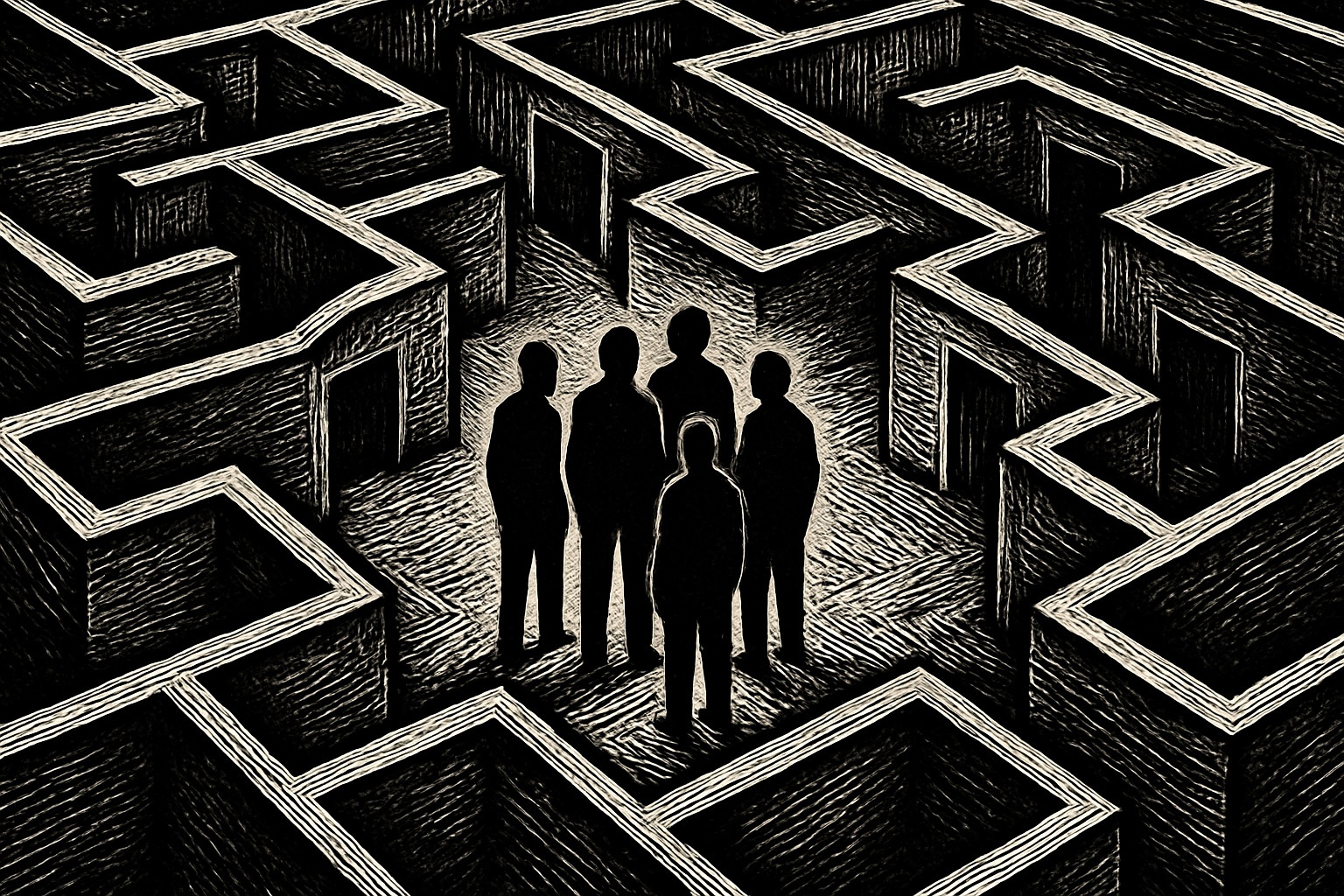
We never thought the words “Lift yourself by your own bootstraps”, would become a curse. When I was a child, it meant work hard and make your own way. We assumed we lived in a world where hard work would bring rewards, and you could succeed merely by applying yourself. If you studied hard and followed the rules you could hardly help but find your way easily in life. The progression was simple and self explanatory:
Study hard, think for yourself, keep an eye out for opportunity, and strike while the iron is hot.
Self discipline. Nose to the grindstone.
Back then, the world still honored that deal. Hard work and a serious attitude earned you a place at the table, and those words could inspire. It was an invitation to take whatever tools you had and build your own life.
I never say those words to my kids now. Not when the systems that once backed these promises are failing. Not when higher education has become a risk instead of a path to security.
My kids finished high school at the cusp of the changeover from the old system to the new. At the time it seemed like the natural progression for them to work to their strengths.
My youngest son taught himself to use 3DS Max at the age of eight. He not only learned to navigate this program and others, but excelled in using them, contributing work (textures) to online work groups creating games before the age of 10. This was no small feat, but for him it was second nature. It wasn’t a goal forced on him, but achieved out of genuine interest, curiosity and joy.
My eldest has always had an interest in technology as well. He could put a computer together and make the software actually WORK with the system well before he finished high school. Even now, if I have an issue with my computer, he’s my go-to, the one who leads me kindly through setting things up and fixing problems.
Their dad was the same. He managed to secure work in IT in his early 20s, not because he had a degree. He didn’t. He just had a knack with computers and coding, all self taught. It seemed that if he could rise through the ranks to become a systems architect at a top tier tech company, without formal degrees, our kids could go even farther with them.
All three of them are systems thinkers, so it seemed that work in systems would be our boys lifeline to a world where they could lift themselves by their own bootstraps.
So our sons applied themselves as if the old reward system was still in place. After years studying they each achieved degrees in their chosen field: IT.
And now here we stand. They carry student debts from a world that no longer exists. Following those old paths, once so solid, have left them with a weight of debt hanging round their necks at the worst possible moment in their young lives.
Just as they’ve started out, entry level jobs in their fields have evaporated. The only openings are for phone support or front-line troubleshooting; fast, social, extroverted roles that neither of them is suited to. Their strengths run deeper: logical, linear, focused work where brilliance happens quietly, without a headset mic pressed against their cheek and the constant strain of performing in a social world.
I see the issues they’re dealing with and wonder, often, if we should have seen this coming?
It’s Not Just My Kids, It’s a Whole Generation
The struggles my own kids are dealing with aren’t personal failures, or lack of effort or ability. The problem is systemic and has been growing silently for years. I know that many will obfuscate the issue by blaming over indulgence (It’s all that avocado toast!) or laziness, but I’m here to tell you now, that is NOT the case. Kids today aren’t that much different than they were in my own day.
I know that AI has become the new target of blame. But that’s just playing more of the blame game... these issues started long before AI was even a thing. AI didn’t raise the rent, cost of tuition or cost of groceries. It didn’t turn starter homes into unachievable dreams or replace apprenticeships with unpaid internships or turn ‘entry level’ into ‘requires 3-5 years experience’.
For young adults today, in Australia, Europe, America, China...everywhere…the staircase that used to lead upward now folds back on itself. You can climb and climb and end up exactly where you started, just exhausted and even more in debt.
Universities cost more and deliver less. Degrees don’t open doors anymore, they barely pry them open. Housing is out of reach. Wages have stagnated. And the jobs that once let people get stable at 22 don’t appear until 30, if at all.
We blamed our own kids, first. Then we blamed education. Now we blame AI. But all of these stories avoid the real one:
The world changed and we never updated the map.
What Really Broke the System
To be painfully honest, the problem isn’t that young people “don’t work hard enough”. It’s not that universities “aren’t preparing them”. It’s not even that AI “took their jobs”.
The truth is simpler and uglier:
Too much wealth has been pulled to the top.
Too much risk has been pushed to the bottom.
And everything in the middle has been hollowed out.
Over the last forty years we’ve become a more productive society, but wages failed to keep up with fair compensation. Housing became an investment that eased the burden of governments in funding retirees, perhaps a welcome relief at first, but it mutated into something ugly and unsustainable.
Companies cut entry-level jobs, incentives that encouraged support of new workers was gutted. Every safety net became a personal cost.
And the few who already had enough found ways to take even more, with no regard for those who struggled to provide the work that fed their greed. Those billionaires so many people idolize? To me they remind me of nothing so much as the fat, shiny grey ticks we used to pull off our dogs when I was a kid growing up in the Ozarks. Those ticks will keep sucking blood from their prey until they swell grotesquely and literally burst from their own reflex to extract.
I grew up in a world where effort translated into stability. A reason to have children and share what we had and pass something of worth to the next generation. Now, governments moan about declining birth rates and play stupid games, hoping to trick the population into providing more worker bees. Not by supporting them, but by taking away all chances of a real future, even their own choice to bear children when it’s sustainable.
But when you’ve hollowed out every last reason to bring a child into this world, having one, even by accident, is a burden very few young people can risk. Heck, how’re you going to raise a child when you can’t even afford to feed yourself?
Sometimes I wonder if having a populace with no choices IS the point. Because people who have nothing are willing to do ANY thing just to survive.
But our young people aren’t stupid. They know this game is rigged. We’re about to find out what happens when a whole generation decides not to play stupid games anymore. Don’t believe me? Search “lying flat”, “tang ping” and “Bai Lan” for a taste of how this plays out.
The “tang ping” movement isn’t likely sustainable long term, though. It won’t stay as “laying flat” forever; it’s already mutating into different forms of withdrawal.
So...What happens next? Personally I’d rather not find out, because it won’t be pretty. Not there. And not here, either.
We’ve accidentally (so they say) turned the world into a massive experiment that parallels The 1960s Calhoun Mouse Utopia experiment. Calhoun found that once the environment broke the social contract, even abundant food couldn’t save the population, and the younger generation became unattached to the social network. They became the ‘Beautiful Ones’ so traumatised by their environment that they turned inward and gave up. They stopped producing offspring. By choice, and out of necessity.
When OUR population and productivity crashes, who will we blame next? We’re running out of scapegoats fast, folks.
A generation isn’t a resource to burn. They deserve a world that gives them a fighting chance at the very least.